
Cudjo Banquante (c. 1720s – 1823)
Enslaved African, Continental Soldier, and Newark’s First Black Businessman
Early Life and Capture
Cudjo Banquante was born in the 1720s on the Gold Coast of West Africa (in present-day Ghana), into a family that tradition holds was part of Akan royal heritage. His given name, Cudjo (or Kudjo), reflects Akan naming practices for boys born on Monday, while Banquante (from Baa Kwante) appears tied to an honorific or title from that culture, suggesting status before his capture.
During a period of intense warfare among African states—with captives frequently sold to European traders—Cudjo was taken from his homeland and sold into the Trans-Atlantic slave trade, setup by the Duke of York’s Royal African Company. After a harrowing Middle Passage across the Atlantic, he arrived in North America and was purchased by the affluent Coe family of Newark, New Jersey.
Enslavement and Revolutionary War Service
As an enslaved man in Newark, Cudjo Banquante served the Coe household. When the American Revolution broke out, local men debated whether to enlist, and Cudjo listened to discussions about liberty, independence, and taxation without representation even as he remained in bondage.
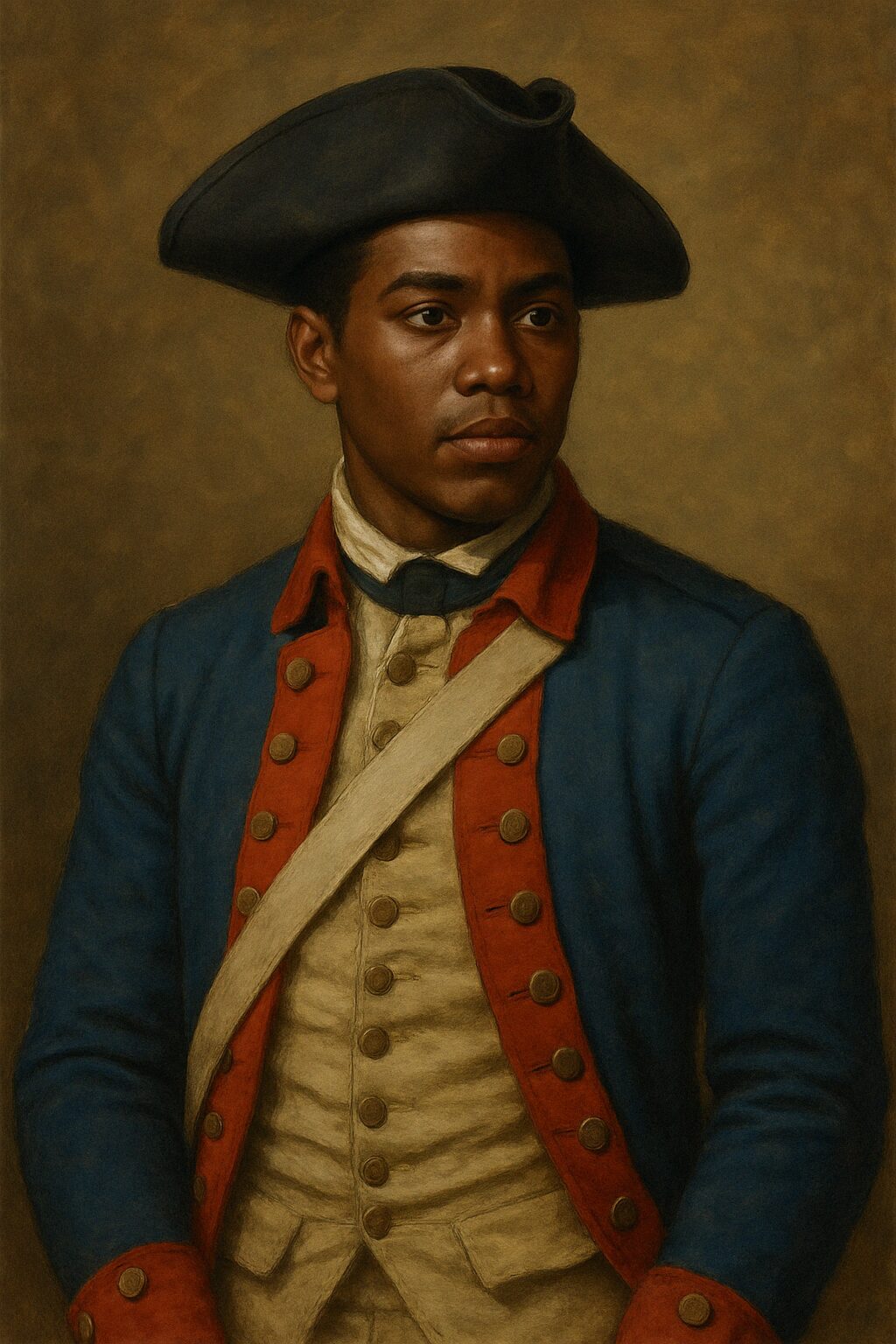
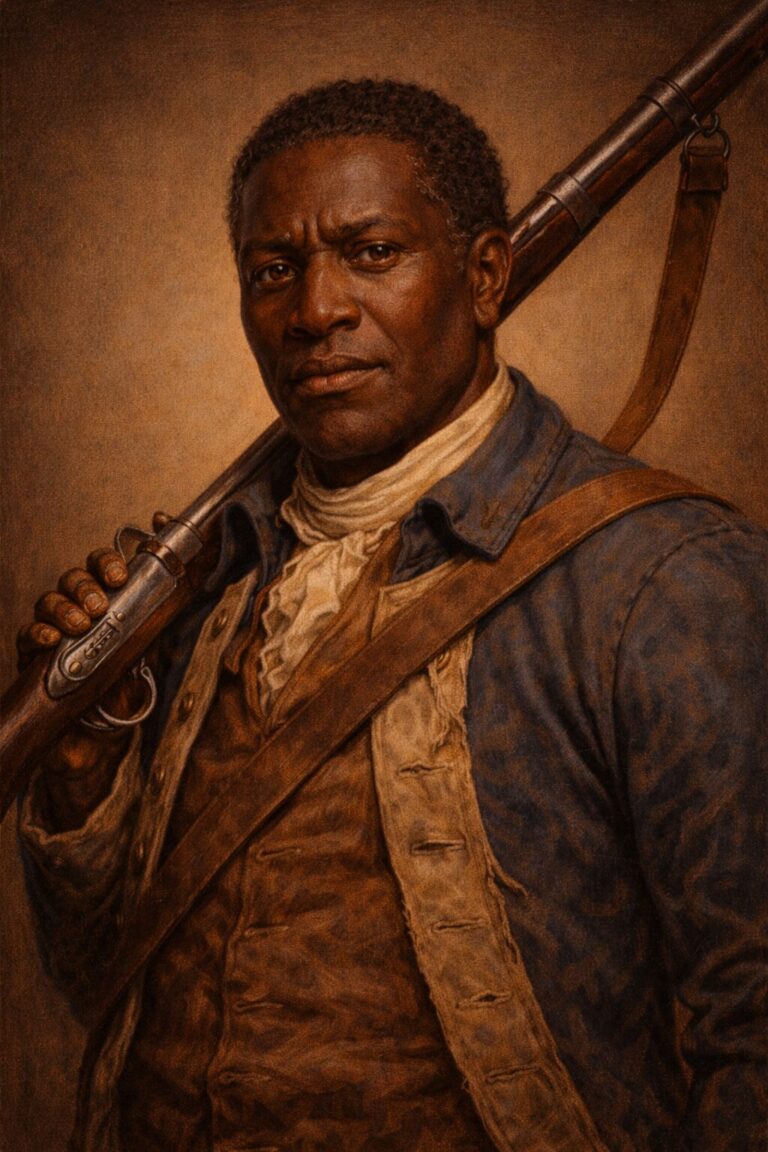
When the elderly Benjamin Coe fled Newark for safety in Hanover, Morris County after British raids in 1776, he enlisted Cudjo as a substitute for himself in the Continental Army. Cudjo’s military service began in March 1777 when he joined the 3rd New Jersey Regiment (part of the New Jersey Line) under the command of Colonel Elias Dayton, serving initially in Captain Peter Dickerson’s company later led by Jeremiah Ballard.
As a substituted soldier, Cudjo fought with distinction in several major campaigns of the Revolutionary War:
- Battle of Monmouth (June 28, 1778): One of the key engagements in New Jersey, this battle demonstrated the growing effectiveness of Washington’s army after Valley Forge. Cudjo was among the Continental soldiers who helped block British efforts to escape toward New York.
- Battle of Germantown (October 4, 1777): Part of the Philadelphia campaign, this fierce battle tested Continental coordination against British forces.
- Valley Forge Winter (1777–78): Although not a battle, the brutal winter encampment outside Philadelphia was a formative experience for Continental soldiers who endured starvation, cold, and disease while emerging as a more disciplined force.
- Siege of Yorktown (September–October 1781): In the culminating campaign of the Revolution, Cudjo fought at Yorktown under General George Washington and General Rochambeau, contributing to the decisive siege that forced British General Cornwallis’s surrender.
For his service in the Essex and Morris County militias and with the Continental Army, Cudjo was emancipated at war’s end. The Coe family granted him an acre of land in Newark—recognition of his sacrifice and contributions.
Post-War Life and Business Success
After the war, Cudjo Banquante returned to Newark as a free man. With the land he was given, he established a nursery and horticultural business, importing and selling ornamental plants, trees, and shrubs. His business made him the first documented Black entrepreneur in Newark, pioneering horticulture and contributing to the city’s commercial life.
Cudjo became a respected figure in Newark’s early Black community known as “Guinea,” admired locally for his resilience and skill. Stories of his life, including his military service and entrepreneurial success, influenced subsequent generations—so much so that children born into slavery were reportedly named after him.
Later Years and Legacy
Cudjo Banquante lived a long life, dying in 1823 at approximately 100 years old. He was buried in the cemetery of Trinity Church in Newark, on the site now occupied by the New Jersey Performing Arts Center (NJPAC).
In 2024 and 2025, local historians and cultural organizations—including the Newark History Society, New Jersey Historical Society, and others—mounted exhibits, lectures, public markers, and events celebrating his life as part of efforts to bring visibility to Black patriots of the Revolutionary era. A historical marker now stands near NJPAC honoring his legacy.
Cudjo Banquante’s story exemplifies the complex intersections of enslavement and citizenship in early America: an African man torn from his homeland, forced into bondage, who fought for independence, secured his freedom, became a successful entrepreneur, and whose life continues to be recognized as part of New Jersey’s—and the nation’s—shared history.