
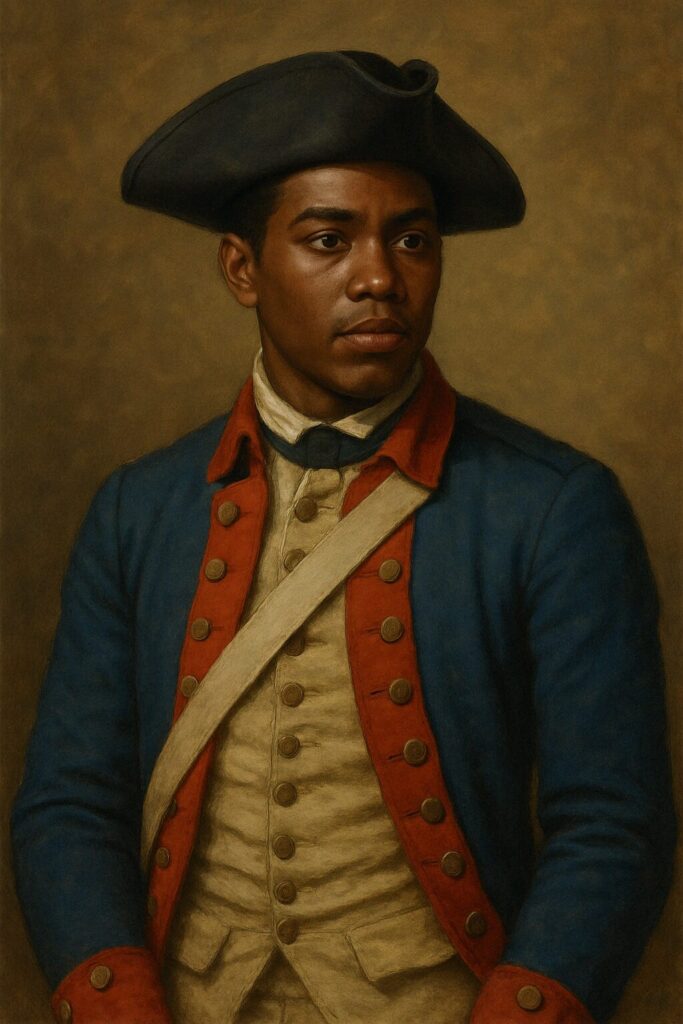
Oliver Cromwell (c. 1753–1853)
Soldier of the Revolution · 2nd New Jersey Regiment · Badge of Merit Recipient
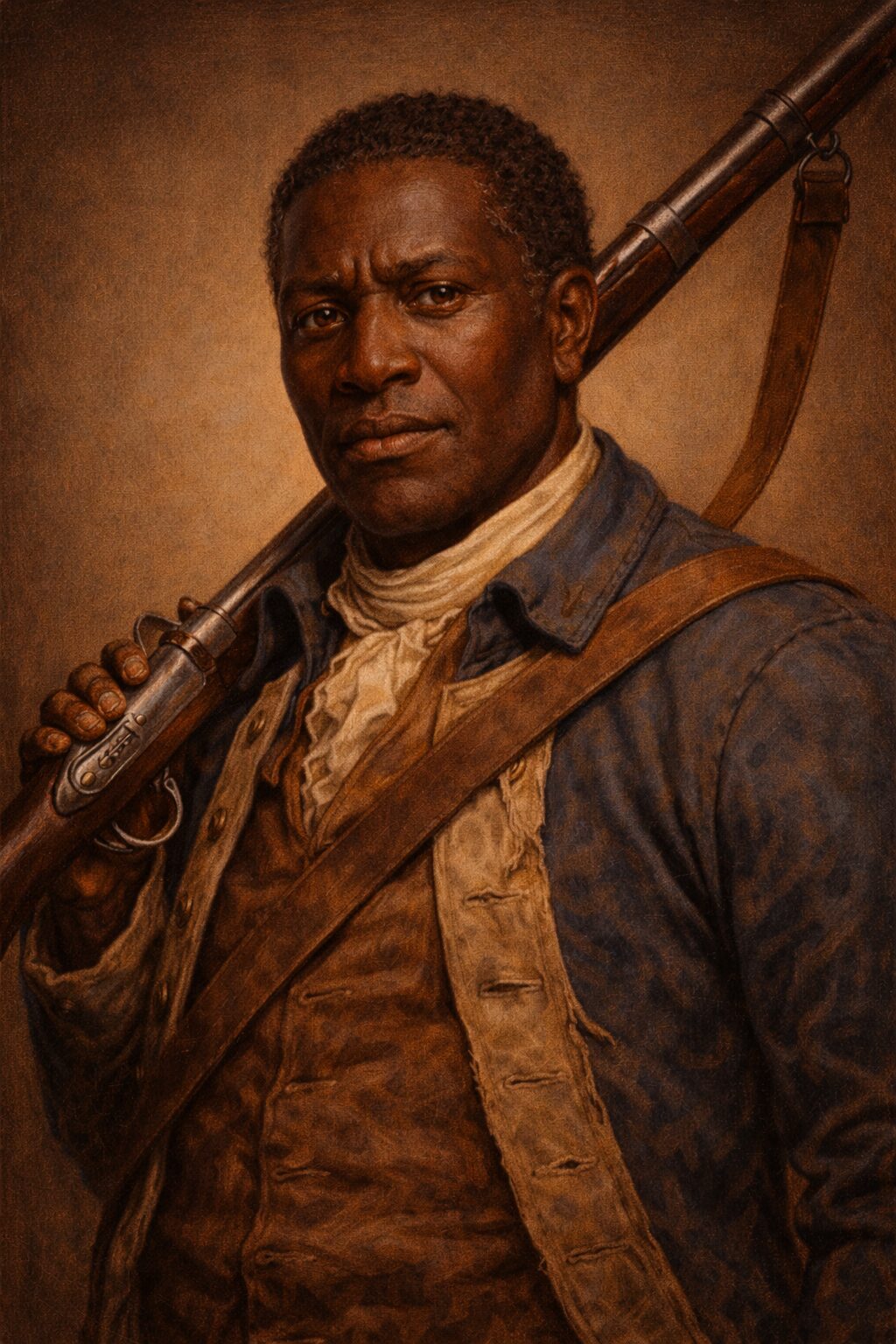
Oliver Cromwell was born in the village of Black Horse (now Columbus), Burlington County, New Jersey, and raised as a farmer in the household of his uncle, Thomas Hutchens. His ancestry was mixed—described in surviving records variously as mulatto and Indian—suggesting African, Native, and European roots. Like many New Jersey patriots of color, his identity was complex, but his loyalty to the revolutionary cause was unwavering.
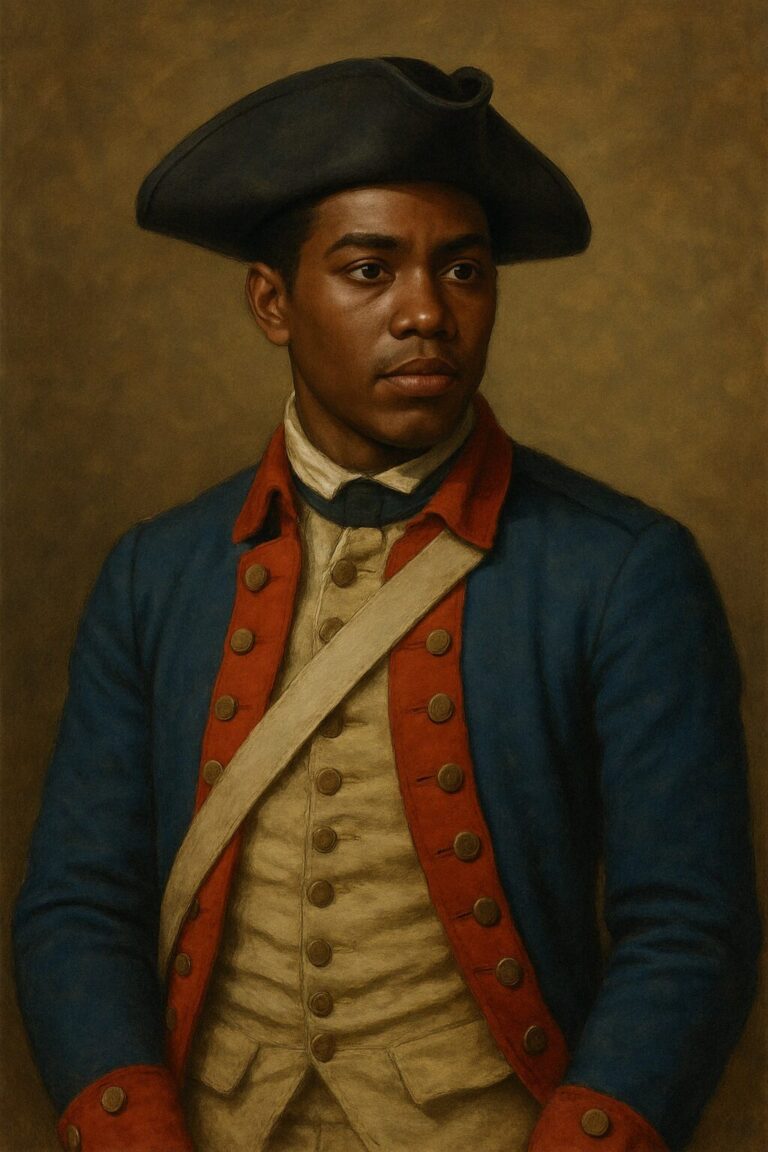
When the American Revolution began, Cromwell first served in the militia and was present during Washington’s famous Christmas crossing in an attack on the Hessian’s occupying Trenton in 1776. On February 1, 1777, shortly after the Battle of Princeton, he enlisted for the duration of the war in Captain James Lawrie’s Company, 2nd New Jersey Continental Regiment, commanded by Israel Shreve. Although men of color were not always prominent in the Continental Army, Cromwell chose to join and was accepted—and he took deep pride in his service.
The 2nd New Jersey was heavily engaged across the state, and Cromwell later recalled New Jersey’s darkest days with particular clarity. His regiment fought in the Battle of Connecticut Farms (June 7, 1780) and the Battle of Springfield (June 23, 1780)—the twin battles that defined the burning of New Jersey. In later life, Cromwell told interviewers that he personally witnessed the destruction of homes during these campaigns, including the burning of the Caldwell parsonage, a memory he carried with visible emotion. In an 1852 interview with the Burlington Gazette, he spoke of seeing the flames rise from the house during the fighting—an eyewitness recollection that directly ties him to the tragedy surrounding Hannah Caldwell and the terror inflicted on civilians during the British advance.
Cromwell’s service record places him continuously with the 2nd New Jersey through the war’s most critical engagements, including Brandywine, Monmouth, Springfield, and Yorktown. Though he later enjoyed telling stories of Trenton and Princeton, those battles occurred before his formal enlistment. What is documented is that he served six full years, remaining with the army until its disbandment.
On June 5, 1783, Oliver Cromwell received his discharge. His papers recorded that he had earned the Badge of Merit, a purple cloth heart bearing the word Merit, personally designed by General George Washington. Awarded to enlisted men for exceptional bravery or long, faithful service, it was one of the first American military honors—and Cromwell was among its earliest recipients.
After the war, Cromwell returned to Burlington County and raised his family. By 1818, age and hardship left him unable to work. In his pension application, he listed his worldly possessions as only a few household items—iron pots, a kettle, chairs, plates, bedding, and his clothing. He supported a disabled adult daughter and two young sons. Congress granted him a pension, recognizing the cost of his service.
In his final years, Cromwell was known locally as a living link to the Revolution. During an interview marking what he claimed as his hundredth birthday, a reporter noted that his eyes brightened at the name of Washington, and that he spoke with deep affection for his former commander. When asked his occupation for the 1850 census, he proudly answered: “Drummer in the Revolution.” Whether literal or symbolic, the statement reflected how fully the war had defined his life.
Oliver Cromwell died on January 24, 1853, and was buried at Broad Street Methodist Church Cemetery in Burlington. Though a monument was proposed in 1914, none was ever erected. Today, his story stands as a testament to the often-overlooked Black and mixed-heritage soldiers who fought in New Jersey—at Connecticut Farms, Springfield, and beyond—and helped secure American independence.